
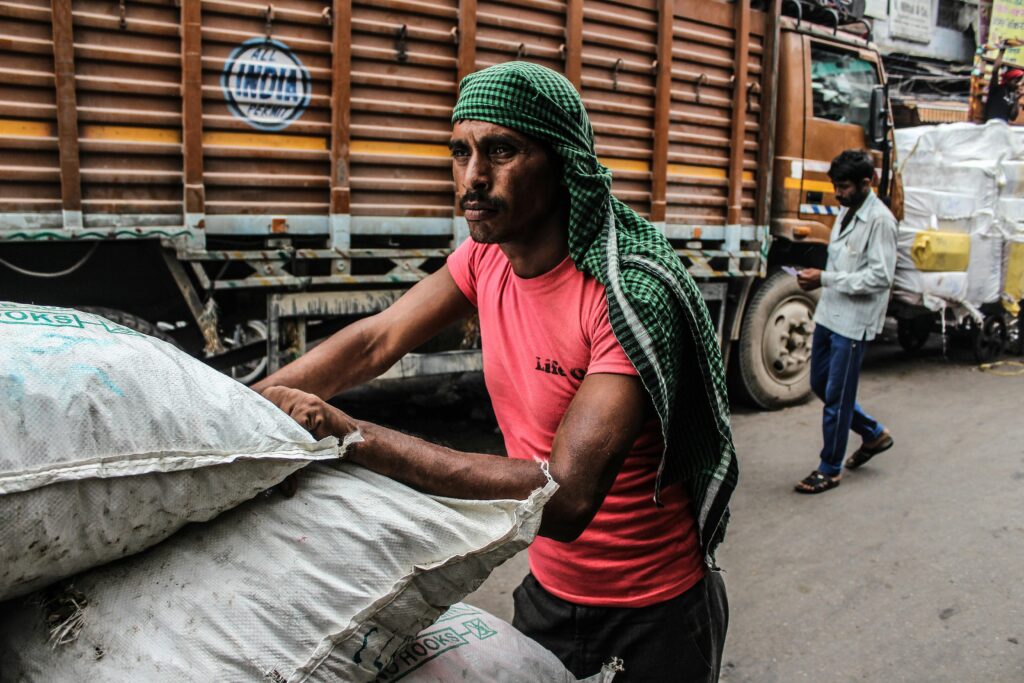
The New Labour Code for India aims to simplify and modernize the country’s complex labour regulations. Even after decades of independence, nearly 90% of India’s workforce remains in the unorganized sector with limited access to social security, despite the total labour force exceeding 50 crore workers. Previously, workers were required to navigate a complicated framework of numerous labour laws, often making compliance and protection difficult. To address this, the Central Government has consolidated 29 separate legislations into four comprehensive labour codes. In this article, we are going to delve into the new labour code of India in detail.
Overview of New Labour Code in India
The New Labour Code in India aims to extend the protection of labour laws to more than 50 crore workers across both organized and unorganized sectors. With nearly 90% of the workforce employed in the unorganized sector, the new codes ensure universal coverage by guaranteeing minimum wages for all and expanding social security to a wider group of unorganized workers. This shift marks a significant step toward reducing long-standing gaps in worker welfare and aligning labour protections with the needs of a diverse workforce. By consolidating various provisions, the codes aim to make compliance simpler and benefits more accessible.
The development of the Labour Codes followed an extensive consultative process led by the Ministry of Labour and Employment. Draft versions of the codes were made public, and multiple rounds of tripartite discussions were held with trade unions, employer associations, and state representatives between 2015 and 2019. The Parliamentary Standing Committee also reviewed all four bills and provided recommendations to refine them further. These reforms reflect the broader national emphasis on recognizing workers as essential contributors to economic growth, aligning with the vision expressed during the launch of the “Shramev Jayate” initiative.
From 29 Labour Laws to 4 Labour Codes
As mentioned, India’s labour regulatory framework has undergone a major simplification, shifting from a complex system of 29 separate laws to just four streamlined Labour Codes. Earlier, workers often had to navigate multiple forms and overlapping rules to claim even a single benefit. The new codification aims to remove redundancies and make labour rights easier to access and enforce.
The Four Labour Codes
- Code on Wages: Consolidates 4 laws to ensure workers’ right to minimum wages.
- Code on Social Security: Merges 9 laws to extend social security coverage to a wider workforce.
- Occupational Safety, Health and Working Conditions (OSH) Code, 2020: Combines 13 laws to enhance workplace safety and welfare.
- Industrial Relations Code: Integrates 3 laws to streamline dispute resolution and employer–employee relations.
1. Wage Code
The Wage Code merges four existing labour laws to create a unified system that guarantees the Right to Minimum Wages for all workers for the first time. It aims to provide wage security, social protection, and timely payments to nearly 50 crore workers across organized and unorganized sectors. By simplifying wage determination and ensuring consistency, the Code strengthens transparency and fairness in wage practices.
Key Features of the Wage Code
- Ensures minimum wages for all 50 crore workers in both organized and unorganized sectors.
- Mandates review of minimum wages every five years.
- Guarantees timely payment of wages to all workers.
- Ensures equal remuneration for male and female workers.
- Extends minimum wage rights to nearly 40 crore workers in the unorganized sector.
- Introduces a national floor wage to reduce regional disparities.
- Simplifies wage determination using criteria such as skill level and geographical area.
- Increases the wage ceiling under the Payment of Wages Act from ₹18,000 to ₹24,000.
2. Social Security Code
The Social Security Code consolidates nine labour laws to establish a unified framework that ensures workers receive essential protections such as insurance, pension, gratuity, and maternity benefits. It aims to create a comprehensive and inclusive social security system by institutionalizing employer and worker contributions and enabling government support for disadvantaged groups. Through this code, social security becomes more accessible to workers across all sectors, including those previously left out.
Key Features of the Social Security Code
- Ensures insurance, pension, gratuity, and maternity benefits under a single consolidated legal framework.
- Institutionalizes a contribution-based system for employers and workers.
- Allows government funding of contributions for workers from disadvantaged groups.
- Provides free treatment under ESIC hospitals and dispensaries through small worker contributions.
- Extends ESIC coverage to workers across all sectors, including the unorganized sector.
- Expands ESIC facilities from 566 districts to all 740 districts nationwide.
- Guarantees ESIC benefits to even a single worker engaged in hazardous occupations.
- Opens ESIC enrolment to platform and gig workers in emerging technology-based sectors.
- Brings plantation workers under the scope of ESIC benefits.
- Mandates ESIC registration for institutions operating in hazardous industries.
3. The Occupational Safety, Health and Working Conditions Code
The OSH Code consolidates 13 existing labour laws to establish a unified framework that ensures safer workplaces, improved health standards, and better working conditions for employees across various sectors. It extends stronger protections to workers in factories, mines, plantations, motor transport, construction, and other high-risk industries. The Code also places significant emphasis on supporting inter-state migrant workers and promoting safer, more inclusive work environments.
Key Features of the OSH Code
- Ensures safety and welfare of workers across sectors such as factories, mines, plantations, motor transport, bidi/cigar units, contract work, and migrant labour.
- Corrects gaps in the Inter-State Migrant Workers Act, 1979 by allowing workers to self-register on a national portal, giving them legal identity and access to social security benefits.
- Requires employers to provide annual travelling allowance for inter-state migrant workers to visit their home state.
- Makes issuance of appointment letters mandatory for all workers.
- Mandates free annual health check-ups for workers.
- Allows construction workers moving between states to receive benefits from the Construction Workers’ Cess fund.
- Ensures ration access under the One Nation – One Ration Card scheme for migrant workers and their families across different states.
- Requires each state to establish a helpline for resolving migrant workers’ grievances.
- Establishes a national database of inter-state migrant workers.
- Reduces eligibility for earned leave from 240 days to 180 days, granting one day of leave for every 20 days worked.
- Expands women’s rights by allowing them to work in all types of establishments, including night shifts with consent and necessary safety arrangements.
- Supports women through the amended Maternity Benefit Act, increasing paid maternity leave from 12 to 26 weeks and requiring crèche facilities in establishments with 50 or more workers.
4. Industrial Relations Code
The Industrial Relations Code consolidates three labour laws to create a more balanced and structured framework for protecting the interests of workers and trade unions. It aims to reduce industrial disputes by improving consultation mechanisms, streamlining dispute resolution, and strengthening social security during job loss. The Code also focuses on fostering stable employer–employee relations through clearer rules for negotiation and grievance handling.
Key Features of the Industrial Relations Code
- Provides unemployment support through the Atal Bimit Vyakti Kalyan Yojna, offering financial assistance to eligible organized-sector workers who lose their jobs.
- Ensures retrenched workers receive 15 days’ wages for re-skilling, credited directly to their bank accounts.
- Strengthens dispute resolution by enabling faster, time-bound decisions through Industrial Tribunals.
- Mandates that worker disputes be resolved within one year by the Tribunal.
- Establishes Industrial Tribunals with two members to expedite case disposal.
- Recognizes a trade union with 51% votes as the sole negotiating union for entering agreements with employers.
- Requires formation of a negotiating council when no single trade union secures 51% support, ensuring collective representation in negotiations.
Comparison of Labour Ecosystem: Pre-Labour Reforms vs Post-Labour Reforms
| Aspect | Pre-Labour Reforms | Post-Labour Reforms |
| Formalisation of Employment | No mandatory appointment letters. | Mandatory appointment letters for all workers, ensuring transparency, job security, and structured employment. |
| Social Security Coverage | Limited social security coverage. | All workers, including gig and platform workers, receive social security under the Social Security Code, 2020—covering PF, ESIC, insurance, and other benefits. |
| Minimum Wages | Applied only to scheduled industries; many workers left uncovered. | All workers receive a statutory right to minimum wages under the Wage Code, 2019, ensuring financial security and timely payment. |
| Preventive Healthcare | No legal requirement for free annual health check-ups. | Employers must provide free annual health check-ups for workers aged 40 and above, promoting preventive healthcare. |
| Timely Wages | No mandatory compliance for timely wage payment. | Employers are required to ensure timely wages, improving financial stability and reducing worker stress. |
| Women Workforce Participation | Restrictions on night shifts and certain occupations for women. | Women may work at night and in all job roles with consent and required safety measures, expanding opportunities for higher income. |
| ESIC Coverage | Limited to notified areas and specific industries; establishments with <10 workers mostly excluded; inconsistent coverage for hazardous units. | ESIC benefits extended across India; voluntary for establishments with <10 workers and mandatory for even one worker in hazardous processes—expanding social protection for all. |
| Compliance Burden | Multiple registrations, licenses, and returns across many laws. | Single registration, PAN-India single license, and single return—reducing and simplifying compliance. |
New Labour Code for New India by Ministry of Labour & Employment
Here is the PDF released by Ministry of Labour and Employment about the New Labour Code for New India:
new-labour-code-for-indiaConclusion
The New Labour Codes mark a significant shift in India’s labour ecosystem by simplifying complex laws, expanding worker protections, and ensuring uniform rights across both organized and unorganized sectors. By consolidating 29 laws into four streamlined codes, the reforms aim to make workplaces safer, strengthen social security, guarantee fair wages, and modernize industrial relations. These changes not only enhance transparency and reduce compliance burdens for employers but also extend long-overdue safeguards to millions of workers, including those in emerging sectors such as gig and platform work. Together, the reforms represent an effort to create a more balanced, efficient, and inclusive labour framework aligned with the needs of a growing and evolving workforce.
FAQs
1. What are the New Labour Codes in India?
The New Labour Codes consolidate 29 existing labour laws into four comprehensive codes: the Wage Code, Social Security Code, Occupational Safety, Health and Working Conditions Code, and Industrial Relations Code.
2. Who is covered under the new Labour Codes?
All workers in both organized and unorganized sectors, including gig and platform workers, are covered under the new labour reforms.
3. What is the right to minimum wages under the Wage Code?
The Wage Code ensures that all workers receive a statutory minimum wage, reviewed every five years, along with timely wage payments to ensure financial security.
4. What social security benefits are provided under the Social Security Code?
Workers now receive benefits such as insurance, provident fund (PF), ESIC coverage, gratuity, maternity benefits, and pensions, with government support for disadvantaged groups.
5. How does the OSH Code improve workplace safety?
The OSH Code consolidates 13 laws to ensure safer work environments, mandatory health check-ups, protections for women and inter-state migrant workers, and safety in high-risk occupations.
6. What protections are offered to workers who lose their jobs under the Industrial Relations Code?
Workers in the organized sector are eligible for financial aid under the Atal Bimit Vyakti Kalyan Yojna and receive re-skilling support during retrenchment.
7. How do the reforms benefit women workers?
Women can now work in all types of jobs, including night shifts, with required safety measures, and have enhanced maternity benefits and crèche facilities.
8. How do the Labour Codes simplify compliance for employers?
The codes reduce complexity by providing single registration, a single PAN-India license, and a unified return system, replacing multiple registrations and overlapping laws.